A New Reality for Therapy
Technology is part of our children’s world.
It influences how they play, communicate, find information and increasingly how they learn. It makes sense that we should also be looking at where it can have a useful place in therapy.
At The Bridge, our learners are already using virtual reality in some of their classes, including History, and the school is looking at ways to embed it more widely into teaching. We are now taking that into our therapy department, with two VR headsets being introduced specifically for therapeutic use.
We already have some exciting ideas about how we could use them. One is the creation of virtual sensory environments that aren’t limited by the size of a physical room. A child could find themselves in a galaxy, interact with the environment, draw or engage with different visual experiences. We can also explore gross motor activities, word games and different ways of working on skills such as phonological awareness.
Meeting children where they are
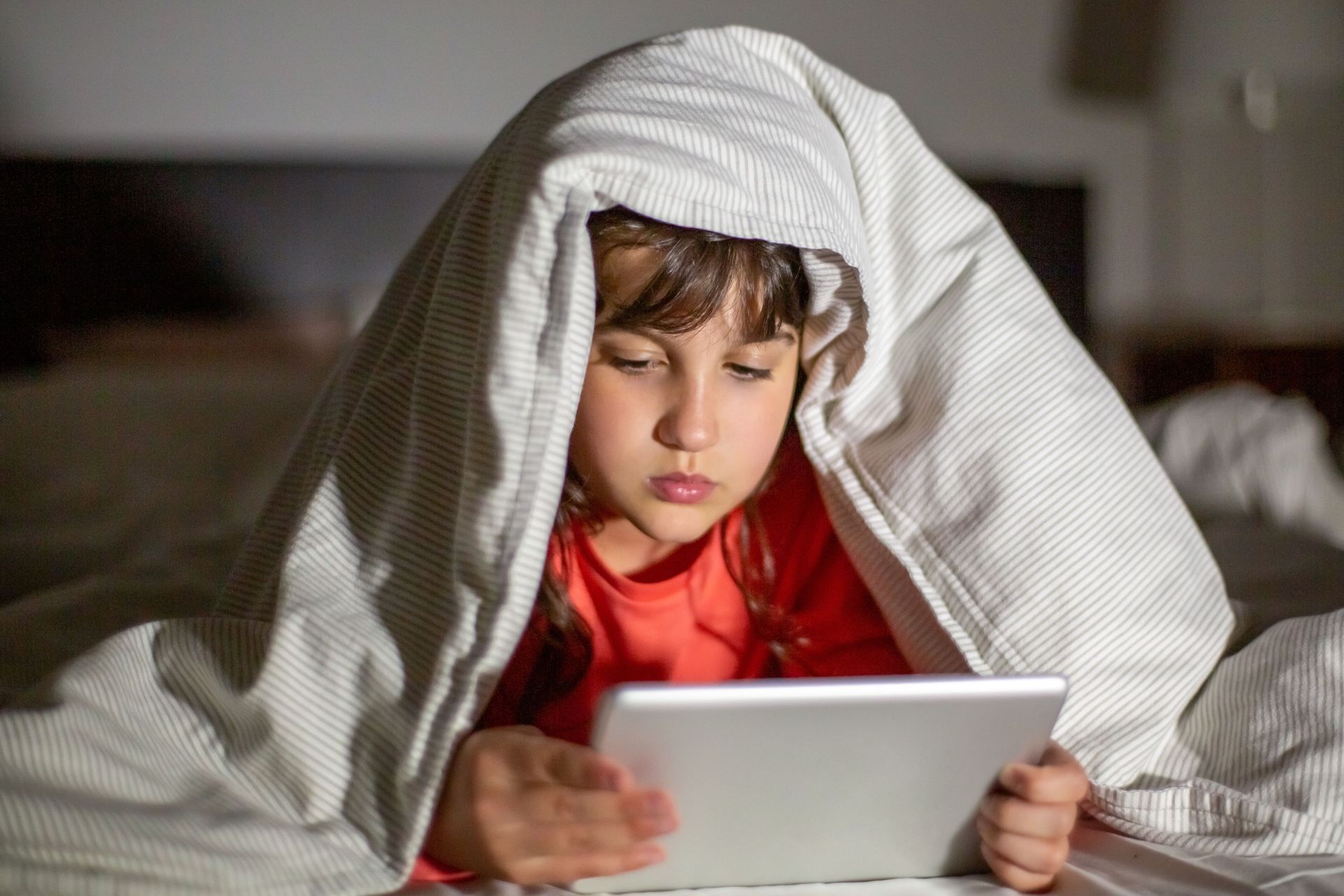
My Master’s research looked at the impact of digital devices on children’s social wellbeing. I used child-centred interviews because I wanted to understand technology from their perspective, rather than only relying on what adults think it is doing to them.
What came through was a far more nuanced picture than the idea that screen time is simply good or bad. Technology can certainly contribute to disconnection, but it can also create connection.
A child playing a game while a parent scrolls separately on a phone is very different from a parent joining that game, watching something with their child or using a shared interest in technology to start a conversation. In both cases there is a screen involved. What is happening around it is completely different.
I think we need the same nuance when we consider technology in therapy.
The children we work with have grown up in a different world from the one many of us did. Technology is already woven into their lives and into education. Therapy needs to evolve too. We cannot continue doing things in exactly the same way we did 10 or 20 years ago without considering how children engage now and what will help us work more effectively with them.
Engagement is important. When a child is interested and wants to participate, we have far more opportunity to work together towards meaningful therapeutic goals.
Beyond the limits of the therapy room
The possibilities around sensory environments are particularly interesting.
Physical sensory rooms require considerable space and equipment. I’ve budgeted for them before and they can cost well over R300,000. A virtual environment gives us access to experiences that would be difficult, expensive or impossible to recreate within a conventional therapy room.
There is an access consideration here too. Specialist education already asks a great deal financially of many families. Having this technology available at school means learners can benefit from it without access depending on whether their family can afford a headset at home.
The emerging research gives us good reason to explore further. Studies involving autistic children and adolescents have investigated VR across areas including cognitive, social and emotional skills, with some encouraging findings. A 2024 meta-analysis of randomised controlled trials reported positive effects across these areas, while later reviews also emphasise that the evidence is still developing and varies considerably across technologies, participants and approaches.
That matters because we are working with individual children.
The experience that completely engages one learner may be uncomfortable for another. Headsets themselves bring sensory demands, and research has identified possible experiences including dizziness, fatigue, eye strain and sensory overload. Those responses need to form part of how we decide whether, and how, VR is useful for a particular learner.
As therapists, we are already observing children all the time. We notice changes in engagement, movement, body language and behaviour, alongside whatever a child communicates to us directly. Introducing VR doesn’t change that responsibility.
Therapy has to evolve
Our therapy department spends a lot of time thinking about what school-based therapy can look like. We meet as a team every morning, share ideas, evaluate what is working and talk through practical solutions when something isn’t.
The headsets give us another area in which to do that.
We have some ideas about how we can use them, from virtual sensory environments to gross motor activities and word games. Now we need to see what happens when our therapists and learners begin working with them.
Which children enjoy the experience? Where does it give us better engagement? Where doesn’t it add anything useful? And what other applications will our therapists find once they have the opportunity to experiment with it?
That’s the part I’m most excited about. I’m looking forward to seeing where we take it.