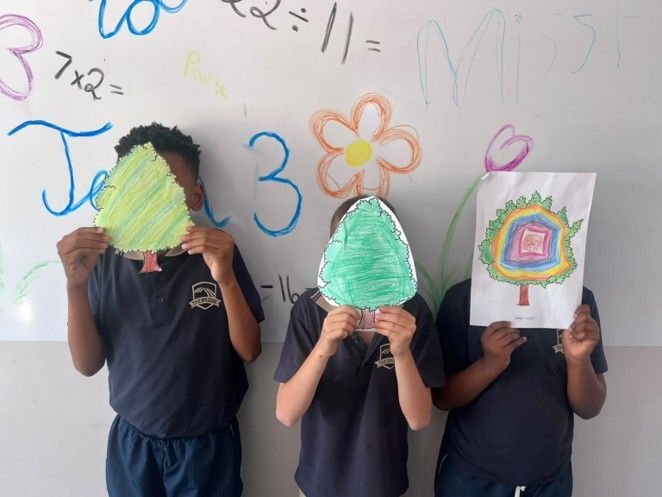
Meet the therapy team at The Bridge Morningside
The therapy team at The Bridge Morningside came to this work by very different routes. Some found their profession through community service, others through family experience, job-shadowing, adult rehabilitation or an interest that started years before university. Those beginnings still show up in the things they notice and the way they work.
They are also working with the same children. A child seen in speech is still the child who may have struggled through assembly that morning, lit up during a favourite lesson or arrived at school already carrying something from home. The therapists meet each morning, share observations, talk through what is working and ask one another for input when something is not.
We asked them how they found their way into their professions, what has shaped them along the way and what they have learnt from working alongside children, families and one another.
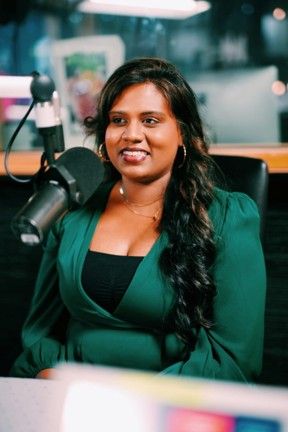
Tashka (Tash) Munisamy
Head of Therapy | Occupational Therapist
Occupational therapist Tash Munisamy heads the therapy department, with a strong interest in what school-based therapy can look like when it sits close to learning and to the child’s everyday experience.
Regulation runs through much of her work. Tash has led conversations around Regulation at the Centre, looking at therapy intensity, therapist wellbeing and how to make therapeutic support sustainable within a neurodivergent school.
Her Master’s research explored the impact of digital devices on children’s social wellbeing and included children themselves in the research. She wanted to understand technology from their perspective rather than relying only on adult assumptions.
That curiosity is also behind the department’s exploration of virtual reality in therapy. Could it improve engagement, create sensory experiences that would be difficult to offer in a conventional therapy room or offer another way of working towards a goal?
Just as importantly, the team wants to see where it adds little, or where the experience may simply not suit a particular child.
Tash’s influence comes through in the way the therapists speak about the department too. When Tahseen Mosam described the value of having enough support, time to think and colleagues to turn to, she added simply: “She makes the biggest difference, I think, to us.”

Katlego Mantsho
Speech Therapist
Katlego arrived at The Bridge after completing community service in a rural public hospital, where she saw both the limits of available resources and the gaps that still exist in the way neurodivergence is understood.
It was there that her particular interest in dyslexia developed.
She saw how easily reading difficulty could be mistaken for lack of intelligence or ability, especially where families had little access to assessment or specialist information.
That experience has shaped the way Katlego works with parents too. She prefers to bring families into the conversation early, sharing observations and asking what they are seeing at home rather than waiting until professionals have reached a conclusion.
“You are part of the team,” she tells parents. “You are not the other person who’s watching from the outside.”
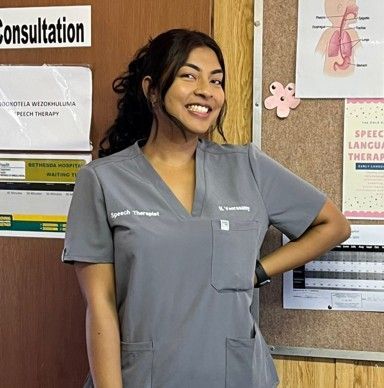
Helene Veersamy
Speech Therapist
Helene’s interest in speech therapy began through her mother, who taught at a school for children with additional needs.
Spending time there made her aware of how much most people take communication for granted, and how deeply a communication difficulty can affect a child’s everyday life.
That stayed with her and eventually led her into speech therapy.
After qualifying, Helene completed community service in rural northern KwaZulu-Natal.
She freely admits that, as a self-described city girl, she was not thrilled when she first heard where she had been placed.
She ended up loving it and describes it as one of the best years of her life.
At The Bridge, she values being able to work close to the other people who know the learner.
Something noticed in OT, the classroom or at home can help make sense of what she is seeing in speech, and the same works in reverse.
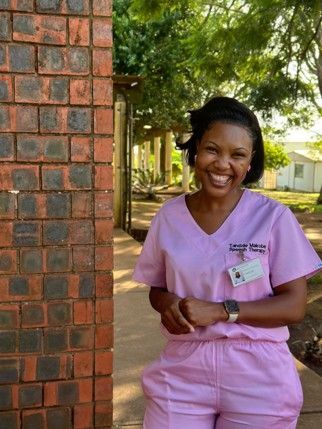
Tandzile Makobe
Speech Therapist
Tandzile is open about how much of her understanding of neurodivergence developed after university.
Much of her practical training had taken place in mainstream settings, and her experience at The Bridge has stretched what she knew.
“I think I learned more once I got here.”
One of the biggest differences has been the amount of communication around each child.
In previous settings, therapists could arrive, see the learners booked for the day and leave again with relatively little contact with teachers or other professionals. At The Bridge, she describes therapists, teachers, psychologists and parents sharing information far more regularly, through everyday conversations as well as MDT meetings, parent discussions and home visits where needed.
“Anyone and everyone that sees or interacts with that child collaborates.”

Tahseen Mosam
Occupational Therapist
Tahseen did not grow up planning to become an occupational therapist.
Medicine had been her first choice and, when that did not work out, she found herself deciding between pharmacy and OT.
She asked herself which job she could genuinely imagine enjoying every day.
After job-shadowing an occupational therapist, she had her answer.
“I think it was the best choice I could have ever made,” she says. “I genuinely love coming to work.”
What she loves about OT is often found in ordinary things.
Brushing your teeth, sitting comfortably enough to work or recognising when your body needs a sensory break can seem small until one of those things becomes difficult.
Helping a child understand and manage those barriers can change a surprising amount of their day.
Tahseen is equally open about the emotional load of therapy. Having colleagues to turn to, enough people in the department and time for the less visible parts of the job helps keep the work sustainable.
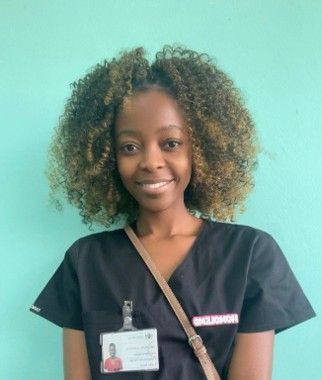
Homolemo Maoko
Occupational Therapist
Homolemo first encountered occupational therapy through adult rehabilitation.
She was drawn to the way OT could help people regain independence in the most ordinary parts of life: getting out of bed, making coffee, brushing their teeth or using an injured hand again.
Community service at Kuils River Hospital gave her a very different kind of practical education.
In a public healthcare environment with limited resources, creativity was often part of the job.
The hospital’s neurodevelopmental clinic introduced her to work with neurodivergent children and Homolemo says she “fell in love” with the field and knew she wanted to stay in that space.
Her interest in independence translates naturally into school-based OT.
A learner may be sitting in class with everyone else while a sensory, motor or regulation difficulty is quietly making participation much harder.
Her work is often about finding where the difficulty lies and what could make participation easier.

Lebogang Mawela
Occupational Therapist
Lebogang is particularly interested in what gets missed when adults become too focused on a child’s difficulties.
Her concern is that strengths can quickly become a footnote once reports, goals and interventions start piling up.
For Lebogang, those strengths belong in the work itself.
“How can we use what they have?” she asks.
She sees the difference clearly in sessions.
A learner may wander, avoid a task or appear unable to concentrate during work they repeatedly find difficult, then become confident and intensely engaged when the activity connects with an interest or strength.
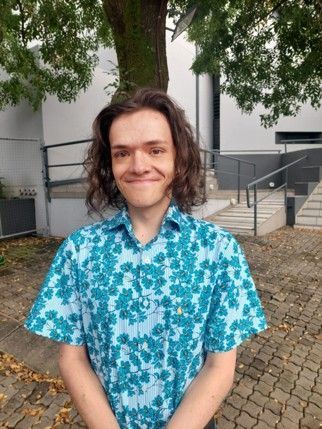
Patrick (April) Bennie
Intern Counselling Psychologist
April knew from around the age of 11 that she wanted to become a psychologist.
Her interest came partly from a fascination with people and how they think, and partly from an early awareness that psychological services simply were not available to enough of the people who needed them.
She joined The Bridge as part of her Master’s internship after hearing about the opportunity through Edutech.
The setting aligned closely with the kind of work she wanted to do and with her interest in neurodivergence.
As the team’s intern counselling psychologist, April adds another perspective to conversations that already include speech, OT, teachers and families.
Their backgrounds are different, and so are the things they notice. One may see something in communication that another has picked up in regulation, learning or behaviour.
What comes through most strongly is how often those observations are shared.
They know their own disciplines well. They also seem very comfortable asking one another what they think.