What does your tree look like?
A simple wellbeing activity at The Bridge School used trees, seasons, colour and creativity to give both staff and children space to reflect in their own way.
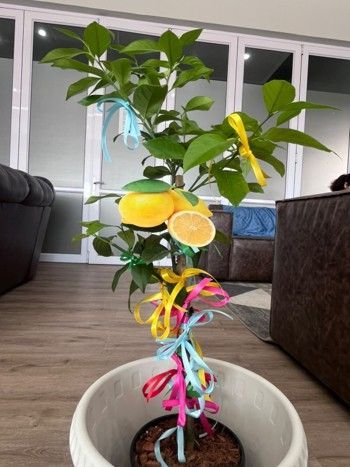
A lemon tree at The Bridge School recently became part of a staff wellbeing activity.
Teachers were given different coloured ribbons, each linked to a particular prompt. Yellow was something to notice or celebrate. Blue represented something they were ready to release. Green was something they wanted to grow. Pink was a reminder to treat themselves more gently and red represented a courageous step.
The ribbons gradually became part of the tree itself, each one carrying something different.
The tree theme then continued with the Foundation Phase children.
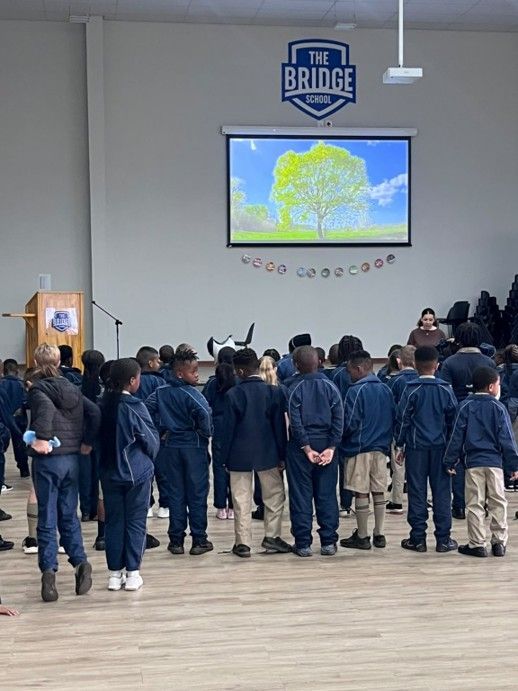
During an assembly, they explored the seasons a tree moves through and the way it can look very different at different times of the year. They also shared a poem and spoke about the strength of a tree through those changes.
“Trees go through different seasons, but they still stand really strong.”
— Alysha Singh
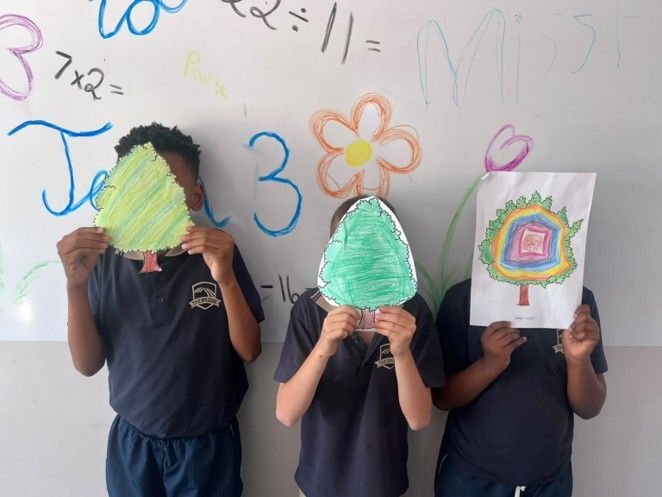
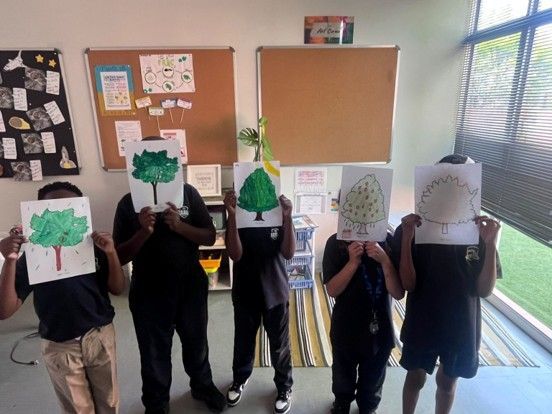
After the assembly, each child was given a tree of their own to complete.
And this is where the activity became particularly interesting.
Some children filled their trees densely with green. One added fruit. Another surrounded the tree with rain. Some worked carefully within the original outline while others expanded beyond it. One child built layer after layer of bright colour into the branches. Another left much of the page open.
There was no single version of what the tree was supposed to become.
For children who do not always find it easy to answer a direct question about how they are feeling, an activity like this can offer another way in. They can draw, choose, colour or create without first having to find the exact words.
That does not mean the adult should then try to decode the picture.
A child’s drawing belongs to the child. Green does not automatically mean one thing. Rain does not mean another. Empty space does not need to be interpreted at all.
The picture may give the child something to talk from if they choose. It may also simply be their way of taking part.
The adult’s role is to stay curious.
- Tell me about your tree.
- Which part did you enjoy doing?
- What is happening here?
- Is there anything you would like me to know about it?
Those questions leave the meaning with the child.
The staff lemon tree worked differently, but the idea underneath it was similar. Adults were also given room to reflect on what they were carrying, celebrating, releasing or hoping to grow.
Children do not experience emotional support in isolation. They are surrounded every day by adults who are also human, also carrying things and also moving through their own seasons.
By the end of the activity, the same basic idea had produced a collection of completely different trees.
Some were full of colour. Some had fruit, rain or sunshine. Some stayed close to the outline and others hardly resembled the starting point at all.
Each child had been given the same tree.
What they made of it was their own.