It Wasn't the Socks
Understanding Sensory Load
The socks were wrong.
Same drawer. Same uniform. Same shoes. Possibly even the same pair your child wore without complaint three days ago.
But this morning they are unbearable.
The seam feels wrong. The shoes come off. The socks come off. You are already late. Someone says, “You wore these last week,” which helps nobody.
And suddenly a pair of socks appears to have wrecked the morning.
Sometimes the socks are the problem.
Sometimes they are simply the point at which a child who has already been managing too much can no longer manage one more thing.
That distinction matters.
Sensory load is rarely one thing
We tend to notice the obvious sensory triggers: the hand dryer that is painfully loud, the scratchy label, the crowded room, the smell of food, the child who covers their ears at assembly.
But sensory load is often less neat than that.
A school day can mean fluorescent lighting, children talking over one another, bells, chairs scraping, people moving through personal space, being bumped in a queue, sitting still, writing, listening, shifting attention, finding the right book, keeping track of belongings and trying to work out what everyone else is doing.
Then add hunger. Or poor sleep. Or a substitute teacher. Or a maths task that is already hard. Or the social effort of getting through break time.
Individually, none of these things may be enough to cause a problem. Together, they may be.
This is why the same child can cope perfectly well with something one day and find it completely unmanageable the next. The environment may look the same to us. Their capacity is not.
It can also look nothing like “sensory overload”
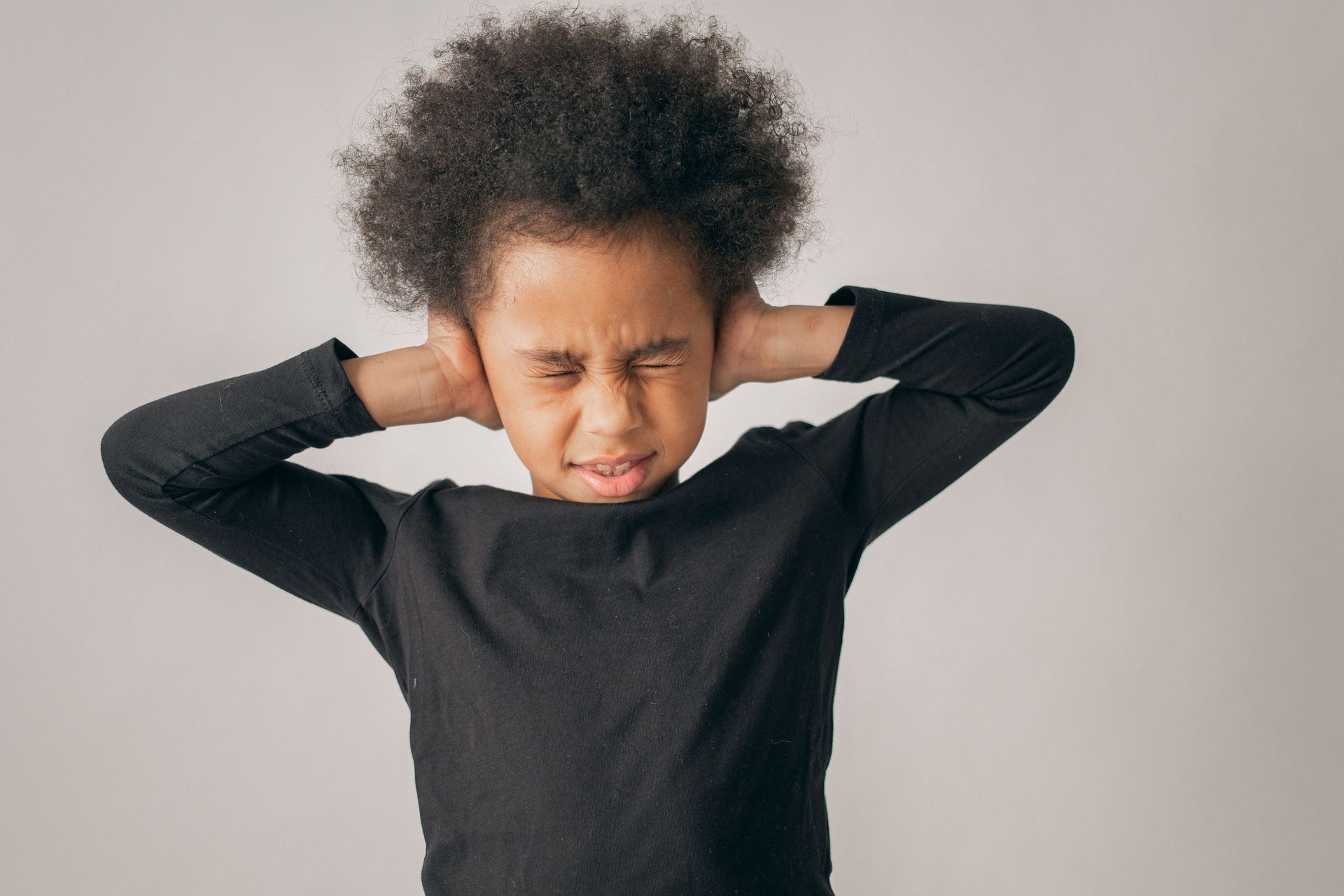
Some children make their discomfort very obvious. They cover their ears, leave the room, cry or ask for something to stop.
Others do not.
A child who is overwhelmed may become louder, more restless or more controlling. They may start annoying a sibling, refusing instructions, arguing over tiny details or becoming suddenly unable to make a simple choice.
Some children become silly. Some become angry. Some disappear into themselves. Some seem fine until they get into the car.
That last one is particularly important.
Parents are often told, “They were absolutely fine at school today,” while sitting beside a child who is falling apart over the wrong snack, the wrong route home or a question they are normally able to answer.
Both accounts can be true. A child can get through the school day and still have used up most of what they had available to do it.
Sensory differences are not all about avoiding things
Some children are highly sensitive to particular kinds of input. Some seem to notice very little. Some actively seek more.
That might look like crashing into furniture, chewing clothing or stationery, touching everything, making noise, rocking, spinning, bouncing or constantly needing to move.
This is where children are easily misunderstood.
The child who cannot stop moving may not be deliberately disruptive.
The child who is constantly touching things may not be ignoring every instruction they have ever been given. The child who makes more noise in a noisy room may be trying to regulate in the only way that currently works for them.
That does not mean adults should never set limits. It means we need to understand what we are looking at before deciding what to do about it.
“But they managed it yesterday”
This is one of the most common points of confusion.
If a child tolerated the shopping centre last Saturday, why are they struggling today? If they wore that shirt yesterday, why is it suddenly impossible? If they sat through assembly last week, why do they need to leave this one?
Because tolerance is not fixed.
It changes with sleep, hunger, illness, stress, emotional load, cognitive load, social load and everything else the child has already had to manage.
Adults know this about themselves. A noisy restaurant at the end of a relaxed day is different from the same restaurant after six hours of meetings, a headache and no lunch.
Children are no different in that respect. They simply have less control over the environments they are expected to tolerate.
Before we call it behaviour
- Not every refusal is sensory.
- Not every outburst is overload.
- Children get frustrated.
- They avoid things.
- They test limits.
- They have preferences.
- They get cross with us.
We do them no favours by turning every difficult moment into a diagnosis.
But when a reaction seems much bigger than the apparent trigger, happens repeatedly in similar circumstances or consistently appears after certain kinds of days, it is worth looking at what came before.
Not just: What happened? But: What had already happened?
- Was the room noisy?
- Had there been several transitions?
- Was the child hungry?
- Had they spent a long time concentrating?
- Had they been in close proximity to people all day?
- Had they been coping with a difficult task?
- Had something changed unexpectedly?
- Were there smaller signs earlier that nobody noticed because the child was still managing to hold it together?
That kind of observation is far more useful than deciding immediately that a child is being difficult.
Regulation cannot be entirely the child's job
Children can learn to understand their own sensory needs. They can learn to ask for space, movement, quieter environments or a break. They can develop strategies that help.
But we need to be careful about what happens next.
If every conversation becomes about teaching the child to tolerate the environment better, we may miss the obvious question: Is there anything about the environment we could change?
Sometimes there is.
A quieter seat. A warning before assembly. Movement between tasks. Fewer questions in the car after school. A change of clothing. Time to eat before homework. A different place to write a test. A chance to step out before the child reaches breaking point.
These are adjustments to the conditions under which we are asking a child to function.
And they need to be individual.
There is no standard sensory kit that works for every child. Noise-cancelling headphones, fidgets, weighted products and movement breaks can be useful for some children and completely irrelevant for others.
The point is not to collect strategies. The point is to understand the child.
Start with the pattern, not the explosion
When something goes wrong, the part everyone remembers is usually the end: the screaming, the refusal, the slammed door, the child on the floor because the socks are wrong.
The more useful information may be in the hour before it. Or the morning. Or the whole day.
What had the child already managed? What was happening around them? What did their body need? Were there warning signs? What happened when the adults changed something? What helped?
When we start noticing those patterns, the behaviour makes more sense.
And once it makes more sense, we have a much better chance of responding to the right thing.
Sometimes the socks really are unbearable. Sometimes they are simply where the load finally became too much.