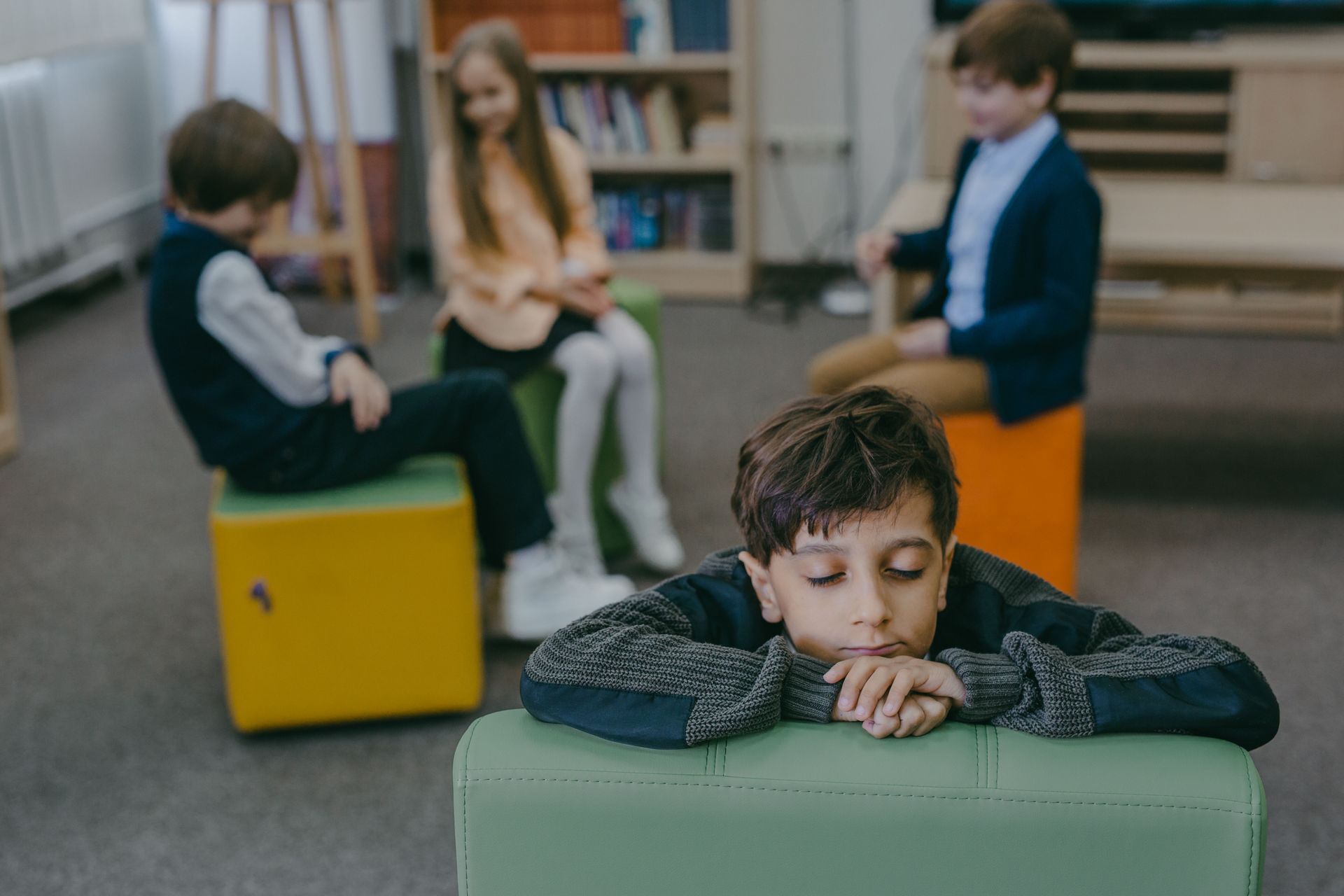
Understanding “High-Functioning” Autism

1 July 2026

Understanding “High-Functioning” Autism

Some autistic children become very good at making other people comfortable.

They smile when they are supposed to. They copy what everybody else is doing. They sit through assemblies that feel painfully loud. They force themselves into group conversations even when they are completely lost halfway through them.

A lot of adults see a child who is coping.


What they do not always see is the amount of effort it is taking.

The term “high-functioning autism” is still used quite widely, especially when people are talking about autistic children who are verbal, academically capable or able to manage independently in some parts of life.


The problem is that children described this way are often struggling in ways that are far less visible.

Sometimes the child getting excellent marks is also the child who cries in the car before school.
Sometimes the child who seems socially capable has spent the entire lunch break trying to work out what everybody else meant.
Sometimes the child who looks calm all day comes home and explodes over the wrong pasta bowl.

Looking capable and coping comfortably are not always the same thing.


What it can look like


Children described this way often have very uneven profiles.

A child may sound mature for their age but struggle badly with unpredictability.


They may cope brilliantly with academic work but become overwhelmed by group projects, noisy classrooms or unstructured social situations.
They may hold sophisticated conversations with adults while struggling to manage friendships with peers.

Some children become intensely perfectionistic because they are terrified of getting things wrong socially.
Others seem to spend the entire day monitoring themselves.


A child may:


  • become overwhelmed by noise, crowds or busy environments
  • struggle when routines suddenly change
  • overthink social interactions constantly
  • need huge amounts of downtime after school
  • become emotionally flooded very quickly
  • mask distress during the school day
  • avoid unpredictable social situations
  • struggle with group work or playground dynamics
  • appear calm externally while feeling highly anxious internally
  • become exhausted by trying to “fit in” all day


From the outside, many of these children look as though they are managing well.

That is often exactly why they are missed.


The exhausting business of masking

Many autistic children work out very early that standing out socially can make life harder.

So they adapt.


They study people carefully.
They rehearse conversations before speaking.
They laugh when everybody else laughs, even if they are not entirely sure why.
They suppress movements or behaviours that help them feel regulated because they are scared of looking different.

Some children become so skilled at this that adults barely notice how much effort everything is taking.

Then the child gets home and there is suddenly nothing left.


Parents often describe children who:


  • melt down after school
  • shut themselves away for hours
  • become irritable over tiny changes
  • seem emotionally exhausted by the end of the day
  • hold everything together at school and fall apart at home


This can be incredibly confusing for families, especially when school reports describe the child as “doing beautifully”.

Sometimes the child is coping.
Sometimes the child is surviving.


Why some children are diagnosed later


Children who are verbal, bright or socially imitative are often identified much later because their difficulties do not match the stereotypes many people still expect.


Girls especially are often missed.


Many are described as:


  • shy
  • anxious
  • sensitive
  • quirky
  • perfectionistic
  • dramatic
  • socially awkward
  • emotionally intense


Some become highly skilled at masking, which means adults see the performance rather than the exhaustion underneath it.

By the time some children are finally identified, they may already have spent years feeling different without understanding why.


Social exhaustion


A lot of autistic children want friendship and connection deeply.

The difficulty is often the sheer amount of processing involved.


A lunch break may involve trying to:


  • follow multiple conversations at once
  • work out tone of voice
  • understand sarcasm or jokes
  • monitor facial expressions
  • decide when it is their turn to speak
  • avoid saying the wrong thing
  • manage sensory overload at the same time


Things other people see as ordinary or fun can become completely draining.

Birthday parties.
Sleepovers.
Crowded restaurants.
Group projects.
Long school days with constant social interaction.

Some children look sociable from the outside while feeling overloaded for most of the interaction.


Sensory overwhelm


Many autistic children experience the sensory world much more intensely than people realise.

The hum of classroom lights.
Chairs scraping.
Somebody tapping a pencil repeatedly.
The smell in the changing room after sport.
A jersey label scratching all day long.

Most people’s brains push these things quietly into the background.

Some autistic children cannot.


By the end of the school day, their nervous system may already be overloaded long before the obvious meltdown happens.

This is why reactions sometimes seem to come “out of nowhere” to other people.

Often, the child has been coping with mounting overwhelm for hours.


School and hidden struggle


School can become complicated for children who appear academically capable because adults may assume they need less support.


A child may:


  • achieve excellent marks while struggling socially
  • mask anxiety throughout the school day
  • become overwhelmed by group work
  • struggle badly with transitions or unexpected changes
  • become intensely perfectionistic
  • appear calm at school but melt down at home
  • spend huge amounts of energy trying not to get things wrong


Sometimes the child praised for coping is actually exhausted from constant compensation.


Helpful support at school may include:


  • predictable routines
  • sensory-aware environments
  • reduced overwhelm where possible
  • processing time
  • flexibility around participation
  • emotional support
  • calm communication
  • safe spaces for recovery and regulation


Children usually cope far better once adults stop focusing only on outward performance and start noticing the effort underneath it.


At home


Home is often where children finally stop holding everything in.


Parents may see:


  • meltdowns after school
  • emotional exhaustion
  • shutdowns
  • withdrawal
  • irritability
  • anxiety
  • rigid behaviour around routines
  • overwhelm over things that seem tiny from the outside


This can feel especially confusing when the child appeared completely fine earlier in the day.

But many children are using enormous amounts of energy simply getting through ordinary school life.

Home becomes the place where all that effort finally spills over.


Strengths and capacity

Autistic children are individuals first.


Many children described as “high-functioning” are deeply thoughtful, observant and knowledgeable about the things they love. Some notice patterns other people miss. Some think in wonderfully analytical or creative ways. Some develop extraordinary depth around particular interests.


Many also show strengths in:


  • deep focus
  • creativity
  • honesty
  • memory
  • problem-solving
  • attention to detail
  • specialist interests
  • strong vocabulary or knowledge areas


At the same time, strengths do not erase support needs.

A child can be bright, articulate and academically capable while still struggling enormously with anxiety, sensory overload, emotional regulation or social exhaustion.

Both things can exist together.


When to seek support


If a child is consistently struggling with sensory overwhelm, anxiety, rigidity, emotional regulation, social exhaustion or coping with everyday demands, it may help to speak to an appropriately qualified healthcare or educational professional familiar with autism.

Assessment is not about reducing a child to a label.

For many families, understanding finally explains years of confusion, exhaustion and misunderstanding.

For many children, it also brings relief.


A final thought


Children described as “high-functioning” are often carrying struggles that other people simply cannot see.

Sometimes the child who looks socially confident has rehearsed every interaction in advance.
Sometimes the child praised for coping is completely exhausted by the effort of trying to appear “normal”.
Sometimes the child who seems fine at school is barely holding everything together underneath the surface.

And sometimes adults only realise how overwhelmed the child has been once everything finally spills over.

1 July 2026
Some parents still have old reports tucked away in drawers with terms like PDD or PDD-NOS written across the top. Then years later, they hear different language around autism and suddenly start wondering whether they have misunderstood everything somehow. Whether the diagnosis still “counts”. Whether they are using the wrong terminology. Whether everybody else got some updated handbook they missed. It happens far more often than people realise. PDD stood for Pervasive Developmental Disorder . PDD-NOS meant Pervasive Developmental Disorder – Not Otherwise Specified . Years ago, these terms were often used when a child showed autistic traits or developmental differences, but did not fit neatly into the narrower autism categories being used at the time. Today, most children who may previously have received a PDD or PDD-NOS diagnosis would now fall under the broader Autism Spectrum Disorder umbrella. But the language changing does not erase the child standing in front of you. What parents often noticed first For most families, it was never really about the terminology in the beginning anyway. It was: the child who became overwhelmed by noise the child who struggled socially in ways nobody could fully explain the child who seemed completely fine one moment and overloaded the next the child who melted down after school every day the child who copied other children constantly just to keep up the child who seemed anxious all the time underneath the surface the child who felt “different” long before anybody had language for why Some children were highly verbal and academically capable but still struggling enormously underneath. Others had uneven developmental profiles that confused the adults around them. A lot of parents knew something was different long before anybody gave it a name. Why the terminology changed Years ago, autism diagnoses were divided into several separate categories, including: Asperger’s Syndrome Autistic Disorder PDD-NOS Childhood Disintegrative Disorder Over time, professionals realised these categories overlapped heavily and often did not reflect how autism actually presents in real life. Some children moved between labels depending on who assessed them. Others did not fit neatly into one category at all. That is one reason the broader Autism Spectrum Disorder diagnosis is now used more commonly. For parents, though, the change in language can sometimes feel unsettling. Especially when: older reports still use PDD-NOS schools use outdated terminology online information contradicts itself different professionals explain things differently family members question whether the diagnosis is “serious enough” That confusion is understandable. What PDD-NOS often looked like Children previously described as having PDD-NOS often showed autistic traits in ways that looked more subtle, uneven or inconsistent than people expected at the time. A child may have: struggled socially but seemed highly verbal managed academically while battling emotionally become overwhelmed by sensory input struggled badly with change or unpredictability copied peers socially to blend in experienced intense anxiety missed social cues seemed “quirky” or “different” without fitting older stereotypes of autism Many children who received this label were intelligent, observant and highly aware of the world around them, but still struggling to navigate environments that felt exhausting, confusing or overwhelming. What is often misunderstood One of the hardest things for many families is that children with more subtle or uneven presentations are often misunderstood for years. Children may be described as: anxious dramatic immature controlling overly sensitive socially awkward perfectionistic difficult Sometimes adults focus only on the behaviour they can see without recognising the stress sitting underneath it. A child who melts down after school may have spent the entire day masking. A child who seems rigid may actually be trying desperately to create predictability in a world that feels chaotic. A child who struggles socially may not lack interest in friendship at all. They may simply be exhausted by how much processing social interaction requires. Often, there is far more happening beneath the surface than people realise. School and hidden effort School can be particularly difficult for children with uneven autism profiles because outward performance does not always reflect internal effort. A child may: achieve good marks while struggling socially appear calm in class but collapse emotionally at home become overwhelmed by noisy classrooms or group work mask anxiety throughout the day struggle badly with transitions or unpredictability spend huge amounts of energy trying not to “get things wrong” Sometimes the child who seems fine is actually surviving through constant compensation. Helpful support at school may include: predictable routines sensory-aware environments reduced overwhelm where possible processing time calm communication flexibility around participation emotional support understanding around masking and exhaustion Children usually cope far better once adults stop focusing only on outward behaviour and start noticing the effort underneath it. At home Home is often where all the held-togetherness finally gives way. Parents may see: meltdowns after school withdrawal irritability shutdowns anxiety emotional exhaustion rigidity around routines overwhelm over things that seem tiny from the outside This can feel deeply confusing when the child appeared completely fine earlier in the day. But many children are spending enormous amounts of energy simply trying to get through environments that feel socially, emotionally and sensory overwhelming. Home often becomes the place where all that hidden effort finally spills over. Strengths and capacity Children previously labelled with PDD or PDD-NOS are individuals first. Many are thoughtful, creative and deeply observant. Some notice patterns other people miss completely. Others develop extraordinary depth around the things they love and care about. Many also show strengths in: creativity deep focus honesty memory problem-solving specialist interests original thinking attention to detail At the same time, strengths do not erase support needs. A child can be bright, verbal and academically capable while still struggling enormously with anxiety, sensory overload, emotional regulation or social exhaustion. Both things are often true at the same time. When to seek support If a child is consistently struggling with sensory overwhelm, emotional regulation, social interaction, anxiety or coping with everyday demands, it may help to speak to an appropriately qualified healthcare or educational professional familiar with autism and developmental differences. Assessment is not about reducing a child to a label. For many families, understanding finally brings language to experiences that previously felt confusing or isolating. A final thought If your child received a PDD or PDD-NOS diagnosis years ago, it does not mean you misunderstood them or somehow failed to keep up. The language evolved. Your child did not suddenly become a different person. Sometimes parents become so anxious about saying the “right” thing that they forget the most important thing was always understanding the child in front of them.  And that understanding matters far more than perfect terminology ever will.
1 July 2026
Some gifted children do not look gifted in the way people expect. They are not always the child bringing home perfect marks and smiling politely in every school photo. Sometimes they are the child arguing with the teacher because the instructions felt illogical. Sometimes they are halfway through a novel under the desk because the lesson is moving painfully slowly. Sometimes they are deeply anxious, emotionally intense or completely exhausted from trying to exist in environments that do not fit them. Some are identified early. Others are missed for years because their giftedness sits alongside ADHD, autism, dyslexia, anxiety or emotional overwhelm. ( neuroparentinghub.co.za ) Giftedness is often far more complicated than people realise. It is not simply “being smart”. Many gifted children experience the world with unusual intensity, depth, curiosity and sensitivity. They may learn rapidly, think abstractly at a young age, ask complex questions or become deeply absorbed in particular interests. At the same time, many also struggle with perfectionism, emotional regulation, boredom, anxiety or feeling profoundly out of sync with the people around them. What giftedness can look like Gifted children do not all look the same. Some are highly verbal and endlessly curious. Some disappear into books or projects for hours. Some ask questions adults are not remotely prepared to answer. Others seem emotionally intense, highly sensitive or constantly frustrated by repetition and routine. A gifted child may: ask unusually deep or complex questions learn rapidly with minimal repetition become intensely focused on preferred interests struggle with boredom in repetitive environments show advanced vocabulary or reasoning become frustrated when ideas move slower than their thinking notice inconsistencies or unfairness quickly experience perfectionism or fear of failure struggle socially with age peers feel emotionally “out of sync” with other children become overwhelmed by sensory or emotional input argue passionately when something feels illogical appear mature in some ways and much younger in others Many gifted children have extremely uneven development. A child may discuss politics or philosophy far beyond their years and still completely fall apart because their sock feels wrong or their routine changed unexpectedly. That unevenness confuses adults constantly. Gifted does not mean easy One of the biggest misconceptions about gifted children is that they automatically thrive. Some do. Others spend years: under-stimulated misunderstood emotionally overwhelmed anxious disconnected from peers hiding their abilities socially frustrated by environments that never quite fit Some children become perfectionistic because things came easily early on and they never learned how to cope with struggle or mistakes. Others underperform intentionally because standing out socially feels unsafe. Some disengage completely after years of boredom and repetition. Giftedness does not protect children from difficulty. Sometimes it creates entirely different kinds of difficulty. Emotional intensity Many gifted children experience emotions intensely. A small injustice can feel enormous. A difficult world event may keep them awake at night. A tiny mistake can spiral into crushing self-criticism. Some children think deeply enough to worry about things adults do not expect children their age to even notice yet. Others become highly sensitive to: criticism conflict unfairness disappointment pressure failure emotional tension around them Adults sometimes mistake this intensity for dramatic behaviour or overreacting. Often, the child is genuinely experiencing emotions with unusual depth and intensity. School and gifted children School can become surprisingly complicated for gifted children. Some thrive academically but struggle socially. Some appear inattentive because they are mentally under-stimulated. Some become disruptive because their brain is searching constantly for complexity, novelty or stimulation. Others become quiet and disengaged after years of feeling disconnected from the learning environment. A gifted child may: finish work very quickly struggle with repetitive tasks become frustrated by slow pacing daydream when insufficiently challenged avoid work they see as meaningless become perfectionistic around mistakes underperform intentionally to fit in socially feel isolated from age peers struggle when learning focuses heavily on memorisation over thinking Sometimes the child described as “lazy” is actually deeply disengaged. Sometimes the child interrupting constantly is desperate for intellectual stimulation. Sometimes the child who appears anxious is carrying enormous internal pressure. Helpful support at school may include: enrichment opportunities intellectual challenge opportunities for deeper thinking flexible learning approaches emotional support understanding around perfectionism and anxiety environments that value curiosity and creativity support for uneven development Gifted children generally cope far better when adults understand that advanced intelligence does not remove emotional or developmental needs. ( neuroparentinghub.co.za ) Giftedness and neurodiversity Some gifted children are also neurodivergent. A child may be gifted and also have: ADHD autism dyslexia anxiety sensory processing difficulties executive functioning challenges This is sometimes called being “twice-exceptional” or “2E”. These children are often especially misunderstood because strengths can mask difficulties, while difficulties can mask strengths. A highly intelligent child may still struggle enormously with organisation, emotional regulation or everyday school demands. Both things are often true at the same time. At home At home, gifted children may: ask endless questions debate everything struggle to switch their brain “off” become emotionally intense react strongly to perceived unfairness hyperfocus on interests for hours become deeply frustrated by mistakes resist tasks that feel meaningless or repetitive need large amounts of downtime after school Some parents describe gifted children as emotionally exhausting and fascinating in equal measure. Many families find themselves parenting children who think deeply, feel deeply and notice far more than adults initially realise. Strengths and capacity Gifted children are individuals first. Many show strengths in: creativity problem-solving curiosity empathy humour rapid learning analytical thinking imagination deep focus around interests original thinking Some ask questions that completely change how adults see the world. At the same time, gifted children still need: emotional support understanding challenge boundaries regulation support connection space to fail safely Giftedness is not adulthood arriving early. They are still children. When to seek support If a child is consistently showing signs of advanced reasoning, intense curiosity, emotional intensity or a significant mismatch between ability and everyday functioning, it may help to speak to an appropriately qualified educational or psychological professional familiar with giftedness and neurodiversity. For many families, understanding giftedness finally explains experiences that previously felt confusing or contradictory. ( neuroparentinghub.co.za ) A final thought Gifted children are often described only through what they can do academically. But many are carrying inner worlds that are far bigger, more intense and more complicated than people realise. Sometimes the child asking endless questions is trying to understand a world that already feels overwhelming. Sometimes the child arguing constantly is searching desperately for logic and fairness. Sometimes the child who appears “too sensitive” is simply noticing and feeling far more than the people around them expected. Gifted children do not need to be turned into tiny adults or walking report cards.  They need understanding too.
1 July 2026
Some children seem to experience the world with the volume turned all the way up. A fluorescent light that everybody else ignores. A classroom that feels unbearably loud by lunchtime. The scratchy tag in the back of a jersey that suddenly becomes the only thing they can think about. A change in routine that appears tiny to adults but feels enormous to the child experiencing it. A social interaction that requires so much concentration it leaves them exhausted afterwards. Autism is often spoken about in clinical terms, but for many families, it first appears in ordinary moments. A child who struggles unexpectedly in busy environments. A child who seems overwhelmed after school. A child who misses social cues, avoids eye contact, becomes deeply focused on specific interests, or reacts strongly to unpredictability. Autism is not one single presentation, personality type or ability level. It is a neurodevelopmental difference that affects how a person experiences, processes and interacts with the world around them. Some autistic children are highly verbal. Some are minimally speaking or communicate differently. Some need significant day-to-day support, while others appear to cope well on the surface but are carrying enormous internal effort. That is why people often refer to it as a spectrum. Not because autistic people are “more” or “less” autistic than one another, but because autism can look very different from person to person. What autism can look like Autism may present differently depending on the child, their age, personality, support system and environment. Some signs may be noticed very early, while others become more visible once school, social expectations and sensory demands increase. An autistic child may: become overwhelmed in noisy, crowded or unpredictable environments struggle with sudden changes or transitions need routine and predictability to feel safe communicate differently from peers take language very literally miss social cues or struggle to read facial expressions and tone become deeply focused on particular interests or topics experience strong sensory sensitivities mask or copy peers in order to fit in socially appear calm at school but emotionally collapse at home struggle to explain emotions or internal experiences need additional processing time become distressed when plans change unexpectedly use movement, repetition or sensory behaviours to regulate themselves Not every autistic child will show all of these traits. Some children are identified early. Others are missed for years because they are academically capable, highly verbal, socially imitative, quiet or working incredibly hard to blend in. Girls in particular are often overlooked because their autism may not look the way people expect it to. What masking can look like Many autistic children spend large parts of the day trying to appear “fine”. They may copy peers, rehearse conversations, force eye contact, suppress sensory discomfort, stay extremely quiet in class or work very hard to follow social rules that other children seem to understand instinctively. Adults often assume this means the child is coping well. Sometimes it simply means the child is using huge amounts of energy to hold everything together. This is one reason many parents hear: “They’re absolutely fine at school.” …while home tells a very different story. After-school meltdowns, shutdowns, emotional exhaustion and sensory overwhelm are often the release valve after a day of constant effort. What autism is often mistaken for Autistic children are frequently misunderstood. Depending on how autism presents, a child may be described as: rude defiant overly sensitive shy dramatic obsessive controlling lazy anxious immature socially uninterested badly behaved Sometimes adults focus only on behaviour without recognising the stress, overload, confusion or sensory discomfort underneath it. A child refusing to enter a noisy hall may not be “difficult”. A child melting down after a timetable change may not be “manipulative”. A child who avoids group work may not be antisocial. Often, there is far more happening beneath the surface. Sensory differences Many autistic children experience the sensory world differently. This can include heightened or reduced sensitivity to: sound light touch texture smell movement temperature crowds clothing food textures Some children become overwhelmed by sensory input very quickly. Others actively seek sensory experiences such as movement, pressure, spinning or repetitive input. Sensory overload can affect concentration, emotional regulation, behaviour, sleep, learning and social participation. Sometimes a child is not “overreacting”. Their nervous system may genuinely be experiencing the environment as overwhelming. Communication and social interaction Autistic communication differences are often misunderstood as a lack of interest in people. In reality, many autistic children want connection deeply, but may communicate, process or interact differently. Communication differences can show up in many different ways. A child may struggle with the fast back-and-forth rhythm of conversation, miss implied meaning, take language literally or find group discussions exhausting to keep up with. Some children communicate more comfortably around shared interests or in one-on-one settings where there is less pressure to read multiple social cues at once. Others may need additional time to process spoken information, especially in busy or noisy environments. Others may speak fluently but still find social interaction exhausting because of the amount of conscious processing involved. Emotional regulation and overwhelm Autistic children often experience emotions intensely. When a child is overwhelmed, overloaded or unable to process what is happening around them, this may lead to: meltdowns shutdowns withdrawal emotional flooding rigid behaviour panic exhaustion These moments are not usually about “attention-seeking”. They are often signs that the child’s nervous system has exceeded its capacity to cope. Strengths and capacity Autistic children are individuals first. Many autistic people also show strengths in areas such as: deep focus and concentration honesty and directness creativity pattern recognition memory attention to detail problem-solving loyalty specialist interests and expertise original thinking Not every autistic child will show the same strengths, and strengths should never be used to dismiss support needs. A child can be highly intelligent and still struggle enormously with sensory overwhelm, anxiety, transitions or social exhaustion. Supporting autistic children at school Children generally cope better when the focus shifts away from making them look “typical” and towards helping them feel safe enough to learn. For some children, simply getting through a noisy assembly, a substitute teacher, an unexpected timetable change or a crowded sports day may already require a huge amount of effort. Helpful supports may include: predictable routines visual supports and clear expectations sensory-aware classrooms reduced overwhelm where possible movement and regulation opportunities processing time preparation for transitions and changes calm communication flexible approaches to participation safe spaces for emotional reset understanding around sensory needs Children generally do better when adults become curious about what behaviour may be communicating, rather than responding only to the behaviour itself. Supporting autistic children at home At home, support often begins with recognising how much effort many autistic children are already using simply to get through the day. Helpful approaches may include: reducing unnecessary overwhelm creating predictable routines where possible preparing children for changes ahead of time allowing recovery time after school supporting sensory needs using calm, direct communication recognising signs of overload early focusing on connection before correction understanding that behaviour is often communication Parents do not need to create a perfect home. Often, the most important thing is that home becomes the place where a child no longer has to hold everything together. When to seek support Some families notice signs of autism early. Others begin asking questions later when social, emotional or school demands increase. If a child is consistently struggling with sensory overwhelm, communication differences, emotional regulation, social interaction, rigidity, anxiety or coping with everyday demands, it may help to speak to an appropriately qualified healthcare or educational professional. Assessment is not about labelling a child as “less than”. For many families, understanding brings relief. It provides language for experiences that previously felt confusing, isolating or constantly misunderstood. A final thought Autistic children are not failed versions of non-autistic children. Many are trying to function inside environments that were simply not designed with their nervous systems in mind. When adults shift from asking: “Why are they behaving like this?” to: “What might this child be experiencing right now?” everything begins to change.
1 July 2026
Some children seem to hear everything and miss half of what was said at the same time. You call their name three times before they respond. Instructions seem to disappear halfway through. They look confused in noisy places. They constantly ask people to repeat themselves. Yet five minutes later they can hear a packet opening quietly from the other side of the house. Auditory Processing Disorder, often called APD or CAPD, is not the same as hearing loss. Children with APD usually hear sounds normally, but their brain has difficulty processing and interpreting what they are hearing, especially spoken language. In everyday life, this can make listening feel exhausting, confusing and overwhelming, particularly in busy environments like classrooms, assemblies, restaurants or group conversations. Many children with APD are working much harder to listen than adults realise. What Auditory Processing Disorder can look like APD can present differently from child to child. Some children struggle most in noisy environments. Others have difficulty remembering spoken information, following multi-step instructions or distinguishing between similar sounds. A child with APD may: ask for repetition frequently seem not to listen misunderstand verbal instructions struggle to follow conversations in noisy places confuse similar-sounding words lose track of multi-step directions appear distracted or “somewhere else” become overwhelmed in busy classrooms need extra processing time struggle with spelling, reading or phonics miss details during verbal teaching seem tired after listening-heavy environments cope better with visual information than spoken information Sometimes adults assume the child is not concentrating. Often, the child is trying incredibly hard to make sense of language that feels as though it keeps arriving scrambled, incomplete or too quickly. Hearing versus processing One of the most confusing parts of APD is that the child may pass a standard hearing test. That is because the ears themselves are often working normally. The difficulty happens further along the chain, in how the brain recognises, filters, organises and interprets sounds, especially speech. This is why many parents hear things like: “But their hearing is fine.” At the same time, the child may still be struggling enormously to keep up with verbal information in real-world environments. Why noisy environments are so difficult For many children with APD, background noise is one of the biggest challenges. A classroom fan. Chairs scraping. Children whispering nearby. Somebody coughing in the corridor. An air conditioner humming overhead. Most people’s brains automatically filter out these sounds so they can focus on the teacher’s voice. For children with APD, everything can arrive at once. By the end of the school day, many are mentally exhausted from trying to listen all day long. What APD is often mistaken for Auditory Processing Disorder is frequently misunderstood because many of the behaviours overlap with other learning and attention difficulties. Children may be described as: inattentive forgetful lazy distracted oppositional immature daydreamy “not listening” Some children are initially assumed to have behavioural difficulties when the real issue is that they are missing large pieces of verbal information. Others may also have ADHD, dyslexia, autism, language difficulties or learning differences alongside APD. That overlap can make things even more confusing for families. The emotional side of APD Children with APD often spend large parts of the day trying to work out what is happening around them. That takes energy. A child may laugh along socially without fully understanding the conversation. They may copy peers because they missed the instruction. They may panic internally when information is delivered too quickly. Some children become anxious about classrooms, group discussions or verbal tasks because they are constantly trying to catch up. Others begin avoiding participation altogether because they are tired of getting things wrong. Over time, repeated misunderstandings can affect confidence, emotional regulation and self-esteem. School and Auditory Processing Disorder School environments can be particularly difficult for children with APD because so much learning depends on listening. Children may struggle with: verbal instructions note-taking while listening classroom discussions group work following fast-paced teaching spelling and phonics remembering spoken information processing information quickly enough to respond A child may fully understand a concept once it is explained visually or one-on-one, yet still appear lost during whole-class teaching. Helpful supports at school may include: reducing unnecessary background noise where possible seating closer to the teacher visual supports alongside verbal instructions breaking instructions into smaller steps checking understanding gently allowing extra processing time written reminders and schedules calm, clear communication reducing pressure around rapid verbal responses Children usually cope far better once adults realise how tiring listening already is for them. APD at home At home, APD can sometimes look like constant repetition. Parents may feel as though they are saying the same thing over and over: Please put your shoes on. Please feed the dog. Please brush your teeth. Please come back, I’m still talking to you. This can become frustrating for everybody. But often the child is not deliberately ignoring instructions. They may have missed part of the information, processed it slowly or become distracted before the message fully registered. Helpful approaches at home may include: gaining the child’s attention before speaking reducing competing background noise where possible giving shorter instructions using visual reminders and routines checking understanding calmly allowing processing time before expecting a response breaking tasks into smaller steps Sometimes the child who seemed constantly frustrated suddenly looks calmer once communication stops feeling like a race. Strengths and capacity Children with APD are individuals first. Many are thoughtful, observant, creative and highly capable. Some become excellent visual learners or problem-solvers because they have spent years finding alternative ways to make sense of information. Some notice details other people miss completely. Others become incredibly good at reading visual patterns, routines or context because they cannot always rely comfortably on spoken information alone. At the same time, support needs remain real. A child can be bright, intelligent and articulate while still struggling enormously with listening fatigue, processing speed or noisy environments. Both things can be true at once. When to seek support If a child is consistently struggling to follow spoken information, cope in noisy environments or process verbal communication, it may help to speak to an audiologist or appropriately qualified professional familiar with auditory processing difficulties. Assessment is not about labelling a child negatively. For many families, understanding APD finally explains years of confusion, frustration and misunderstandings. A final thought Children with Auditory Processing Disorder are often working much harder to listen than the people around them realise. Sometimes the child who seems distracted is actually overloaded. Sometimes the child who keeps asking “What?” is trying desperately to piece the information together before the conversation moves on. Sometimes the child who appears to ignore instructions simply did not process them clearly enough in time. Understanding APD helps adults move away from: “Why aren’t they listening?” and towards:  “What might listening feel like for this child right now?”
Exam stress
19 June 2026
Help your neurodiverse child manage exam stress this June. Practical strategies for parents of children with ADHD, dyslexia, and anxiety to ease exam pressure.
Occupational therapy
19 June 2026
Discover how school-based occupational therapy supports children’s learning, sensory needs, and classroom development. Learn how in-class OT makes a real difference.
15 June 2026
Why Teacher Wellness Matters
Books with apple on top
12 June 2026
Not sure whether mainstream, remedial, or assisted learning suits your child? Explore the key differences in support and environment to make a confident decision.
A boy in a blue  shirt is holding a pen
12 June 2026
Discover the signs of dyspraxia in children, how it differs from dyslexia, and what parents can do to support their child at home and school. Updated for 2026.
10 June 2026
Raising cheetahs: How the right environment helps gifted children thrive